What You'll Learn
- The age limits banks and housing finance companies set for home loans in 2026, from their own pages
- How much a pensioner can borrow on a pension alone, and how a son or daughter as co-applicant changes that
- What rate to expect after the October 2026 repo rate rise
- The papers and tax rules that matter once you've retired
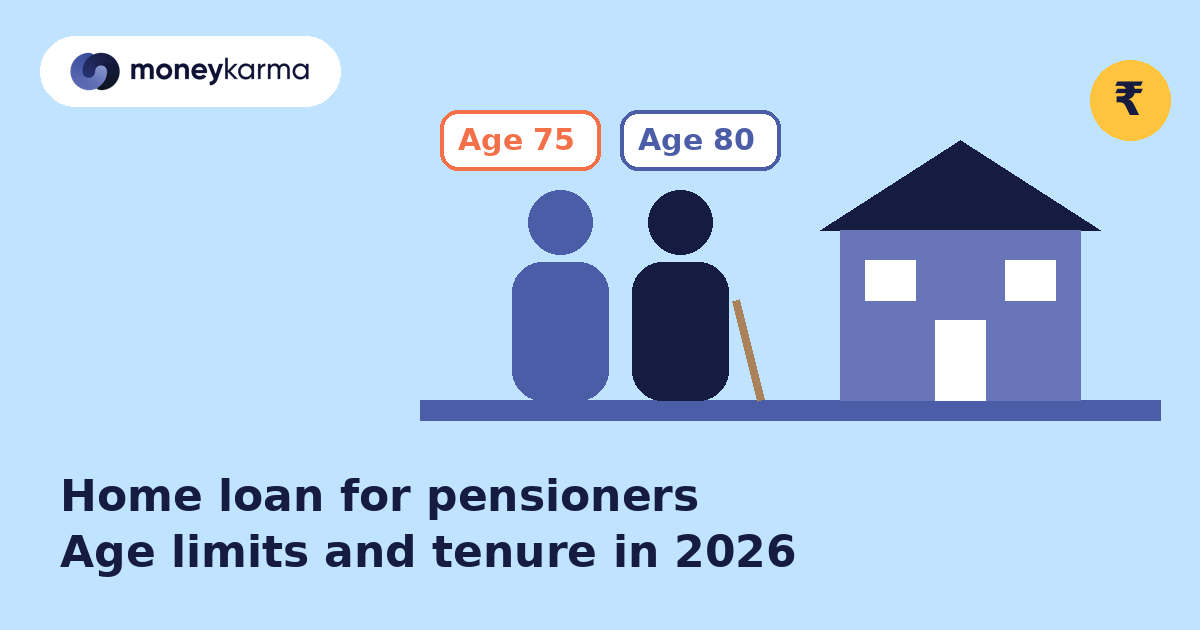
Yes, you can get a home loan as a pensioner or a senior citizen above 60, but the age limit shapes almost everything else. Most banks we checked on 22 October 2026 want the loan repaid by the time you turn 75, and one large public-sector bank caps the age at 70. A few housing finance companies run pensioner schemes that run until 80. Lenders count a regular pension as income, so the real questions are how many years you have left on the clock and whether an earning child joins the loan. This guide comes from MoneyKarma, India's home loan platform with 90+ lenders. Not a lender.
Key takeaway: Tenure is the pensioner's main constraint. At 62, a loan that must end at 75 gives you 13 years; adding an earning son or daughter as co-applicant can lift both the amount and the tenure, and at some banks it's required once you're past 60.
Can a pensioner get a home loan in India?
Yes. Banks treat a defined-benefit pension, such as a government, defence, bank or PSU pension, as steady income. Rent and deposit interest can sometimes be added, though lenders usually give them less weight.
What lenders won't do is run a loan past their maximum age, so the age at the end of the loan matters more than the age at the start.
What is the maximum age for a home loan?
These limits come from each lender's own home loan page, checked on 22 October 2026. Lenders aren't named.
| Lender type | Maximum age or tenure rule | Extra condition |
|---|---|---|
| Public-sector bank A | Up to 30 years or age 75, whichever is earlier | None stated on the page |
| Public-sector bank B | Up to 30 years or age 75, whichever is earlier | Entry age under 60; at 60 or above, the loan must be joint with an earning spouse or earning legal heirs |
| Public-sector bank C | Up to 30 years or age 75, whichever is earlier | None stated on the page |
| Public-sector bank D | Maximum age considered up to 70 | Its FAQ also mentions retirement or 65, so confirm which applies |
| Housing finance company pensioner scheme | Up to 30 years or age 80, whichever is earlier | Entry age up to 65; for defined-benefit pensioners |
The housing finance company's scheme also lets pensioners apply jointly with earning children for a higher loan amount. Its terms come from the company's own statement, so confirm the current version with the lender before you apply.
How much home loan can a pensioner get?
Two limits apply, and you get the lower one. The first is the property's value: RBI caps home loans at 90% of value for loans up to ₹30 lakh, 80% for loans above ₹30 lakh up to ₹75 lakh, and 75% above that. The second is what your income can carry, which is where age bites.
Take Ramesh, 62, a retired central government officer in Hyderabad with a net pension of ₹70,000 a month and a good credit score. He wants a ₹60 lakh flat. Assume his lender lets EMIs take up to half his income, so ₹35,000 a month, and charges 7.50%. Both are illustrative assumptions; these are MoneyKarma calculations using the standard reducing-balance formula.
| Route | Tenure | Loan Ramesh can get | EMI |
|---|---|---|---|
| Bank loan ending at age 75 | 13 years | About ₹34.8 lakh | About ₹35,000 |
| Pensioner scheme ending at age 80 | 18 years | About ₹41.4 lakh | About ₹35,000 |
| Joint loan with his son, earning ₹1.2 lakh a month | 20 years | ₹48 lakh (80% of value) | About ₹38,670 |
On his pension alone, five extra years of tenure add about ₹6.6 lakh to what Ramesh can borrow. With his son as co-applicant, the combined income is no longer the limit. The 80% cap on value is, so the loan stops at ₹48 lakh and he needs ₹12 lakh of his own, plus stamp duty and registration.
Does a co-applicant extend the tenure?
Sometimes. Some lenders set the tenure by the younger earning co-applicant's age, others still go by the older borrower's. Ask how the lender calculates it before you apply, because it decides the EMI.
What interest rate will a senior citizen pay?
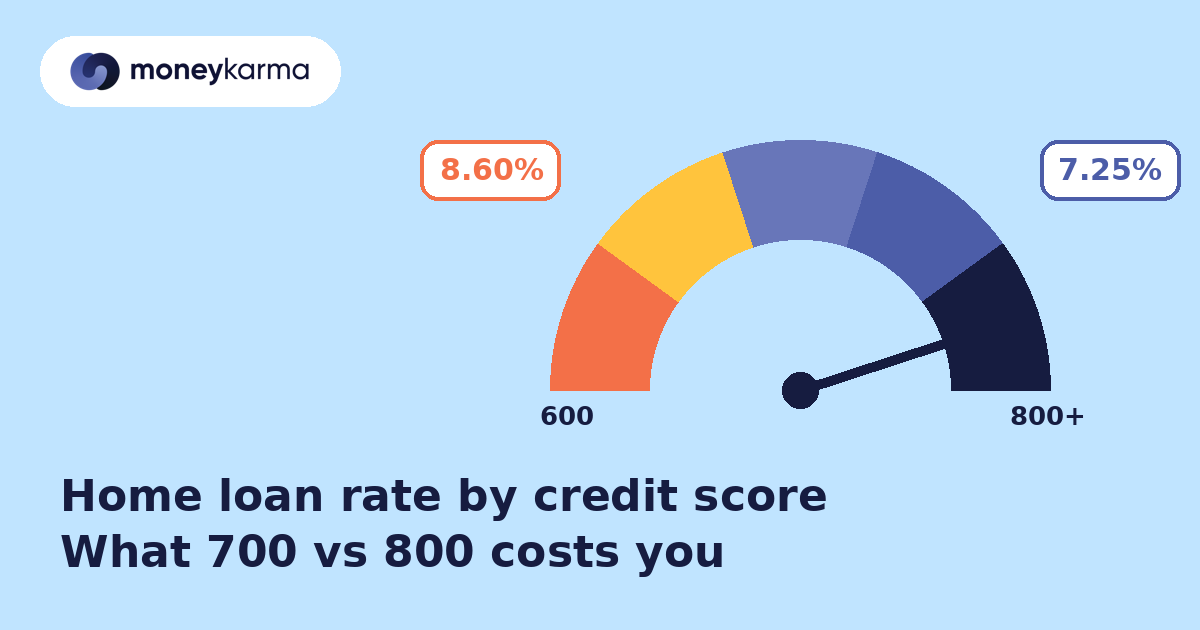
Your age doesn't usually change the rate. Your credit score, loan amount and the lender's benchmark do. After the RBI raised the repo rate to 5.50% on 7 October 2026, the lowest published rate we found on 22 October 2026 was 7.25%, at a public-sector bank, for borrowers with a credit score of 800 or more. A second public-sector bank's card started at 7.40% for 825 and above, and a third listed 7.50% onwards from 15 October 2026. You can see home loan interest rates across Indian banks on MoneyKarma.
A long record of repaid loans and a government pension both work in a retiree's favour.
What documents does a pensioner need?
Beyond the usual identity, address and property papers, expect to show:
- Pension payment order (PPO) or a pension certificate
- Bank statements for the last 6 to 12 months showing pension credits
- Income tax returns for the last two or three years, if you file them
- Proof of any rent or interest income you want counted
- The co-applicant's salary slips, Form 16 or ITRs, and their bank statements
Many lenders also ask senior borrowers to take loan-linked life cover. The premium climbs steeply with age, so get it in writing and compare it with a term plan.
Is a home loan worth it after retirement?
It can be, if the EMI leaves enough for medical costs and a buffer. Pensions rise slowly while health spending can jump, so keep total EMIs well under half of a fixed income.
If you're putting in a lump sum from your retirement corpus, compare the loan's rate with what that money earns. Paying 7.25% to 7.50% to keep money in a deposit earning less makes little sense. Prepaying a floating-rate home loan carries no charge at banks under RBI rules, so you can also borrow now and pay down when a maturity comes in.
Can a pensioner claim tax benefits on a home loan?
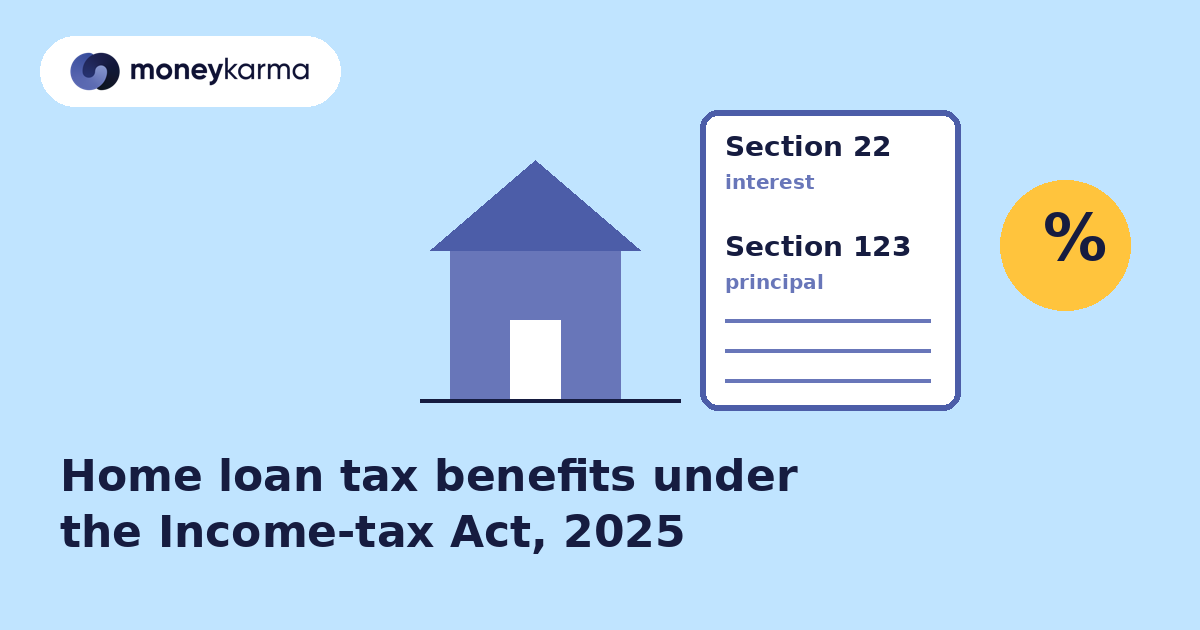
Yes, if you file under the old tax regime. Under the Income-tax Act, 2025, interest on a loan for a self-occupied home is deductible under section 22, up to ₹2 lakh a year, and principal counts toward the ₹1.5 lakh limit under section 123. Under the default new regime, there's no deduction for a self-occupied home. On a joint loan, each co-owner who also pays the EMI can claim their share.