What You'll Learn
- What "bank-approved project" really means, and how to check it yourself
- The five main risks of a home loan on an under-construction flat
- Why builder-paid EMI (subvention) schemes went wrong, and what RBI rules say
- A worked example of what an 18-month delay costs
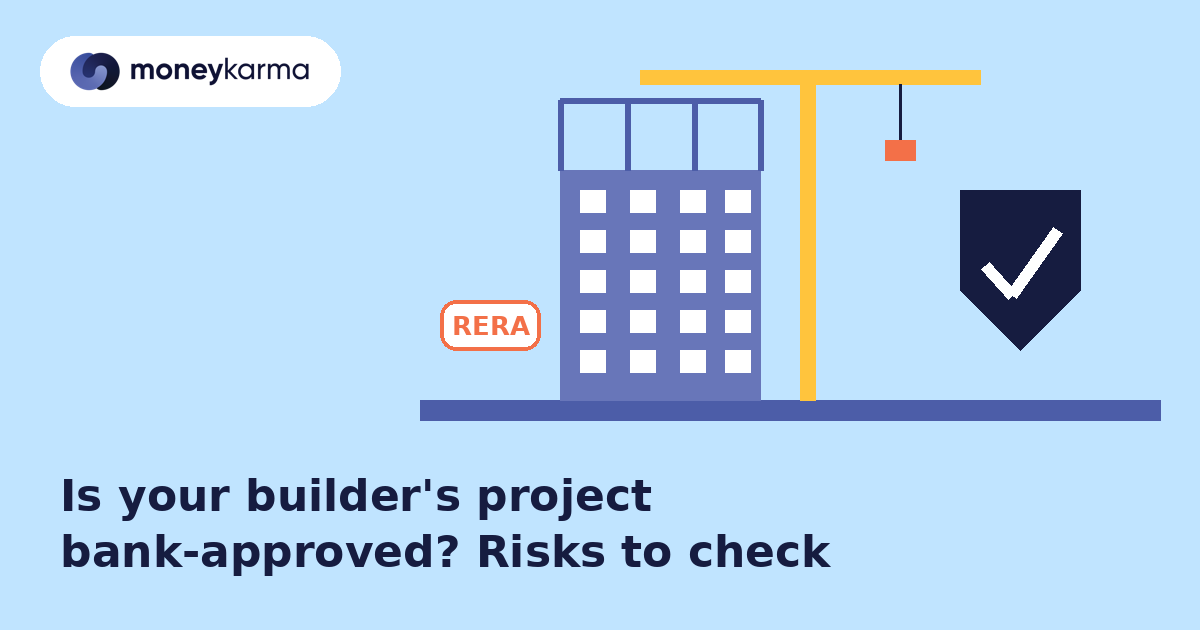
A bank-approved project is one a lender has already checked for land title, approvals and the builder's track record, so it can sanction loans to buyers there faster. It's useful, but it isn't a promise that the flat will be finished on time. To check a project, ask the builder for the list of lenders that have approved it, confirm with each lender, and look up the project's registration on your state's RERA website. This guide covers those checks and the risks that remain. It comes from MoneyKarma, India's home loan platform with 90+ lenders. Not a lender.
Key takeaway: Treat bank approval as a starting filter, not a safety certificate. Your own protection comes from RERA registration, a construction-linked payment plan and a loan that's released stage by stage, as RBI requires.
What does "bank-approved project" mean?
Before lending to buyers in a project, many banks and housing finance companies run their own legal and technical check on it once. They look at the land title, building approvals, the builder's finances and past projects. If it passes, the project goes on the lender's approved list. Some banks publish these lists on their websites.
For you, approval mostly saves time, since the lender won't redo the full legal check on your flat. It also tells you at least one institution has read the title papers.
What it doesn't tell you is that the builder will finish on time. Each lender approves a project for its own lending, and approval doesn't move risk from you to the bank. If the project stalls, you still owe the EMIs on whatever has been released.
How do you check if a project is bank-approved?
- Ask the builder's sales team which lenders have approved the project, and get the list in writing.
- Call or visit two of those lenders and confirm the project name, phase and tower are on their approved list. Approval for tower A doesn't always cover tower D.
- Search the project on your state's RERA portal. Check the registration number, the promised completion date, the quarterly progress updates and any complaints.
- Compare the RERA completion date with the one in your agreement. If they differ, ask why before you pay.
- If only one lender has approved a large project, ask why others haven't.
What protection does RERA give you?
The Real Estate (Regulation and Development) Act, 2016 requires most projects with land above 500 square metres or more than eight apartments to register before they're marketed. A few of its rules matter directly to a home loan buyer:
- Section 13: the builder can't take more than 10% of the flat's cost as an advance or booking fee before a registered agreement for sale.
- Section 4(2)(l)(D): 70% of money collected from buyers must go into a separate bank account and be used only for that project's construction and land cost.
- Section 18: if possession is delayed, a buyer who stays in the project is entitled to interest for every month of delay, and a buyer who withdraws can claim a refund with interest.
What are the risks of a home loan on an under-construction flat?
1. Delay
This is the most common one. While the flat isn't ready, you pay interest on the amount released and often rent as well.
2. Interest you can't fully claim on tax
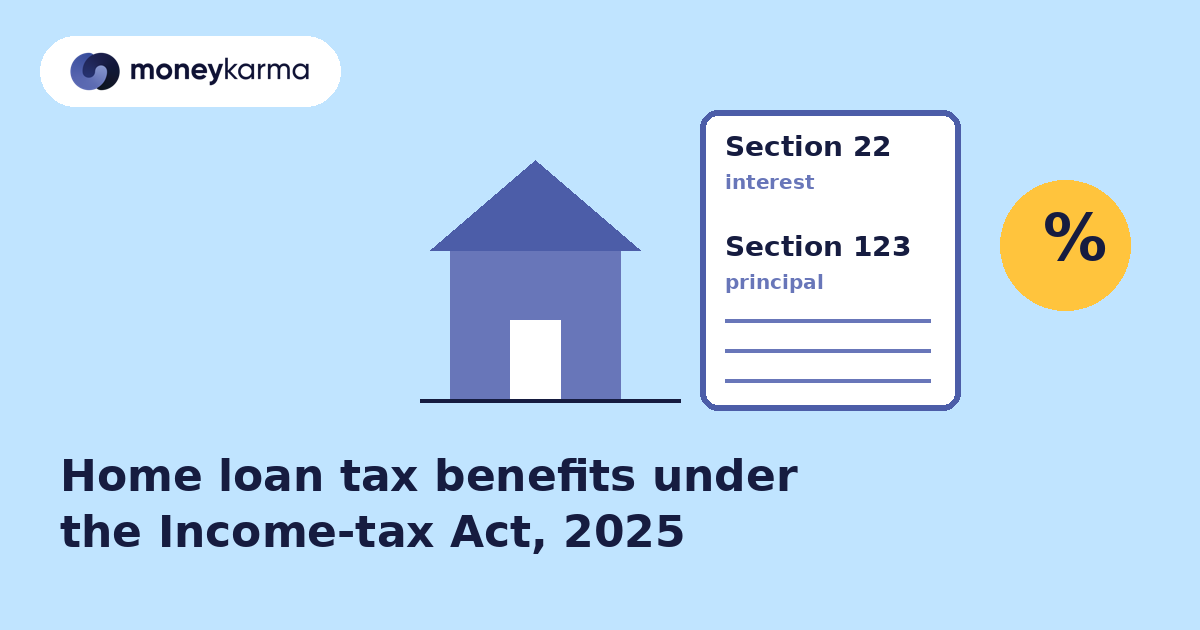
Under the Income-tax Act, 2025, section 22 lets you claim interest from before possession in five equal parts, within the ₹2 lakh yearly cap for a self-occupied home under the old regime. If construction isn't completed within five years from the end of the tax year you borrowed in, the cap drops to ₹30,000.
3. Rate rises during construction
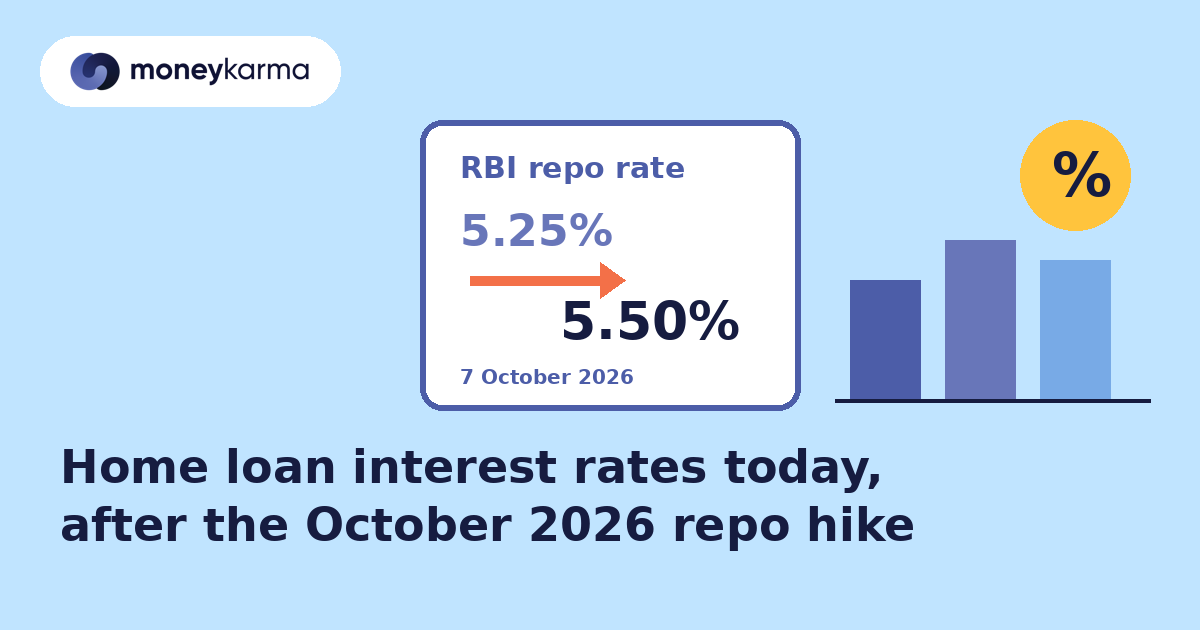
Most home loans are floating. The RBI raised the repo rate to 5.50% on 7 October 2026, and banks passed it on within days. On 22 October 2026, the lowest published rate we found was 7.25%, at a public-sector bank, for a credit score of 800 or more. A second public-sector bank started at 7.40%, and a third at 7.50% from 15 October 2026. Check today's home loan interest rates across Indian banks before you lock in.
4. A stalled project
If the builder runs out of money, the loan doesn't pause. This is why a stage-linked loan matters: you only owe what's been released for work actually done.
5. The builder's promises about your EMIs
That's the subvention risk, covered next.
Is a subvention scheme home loan safe?
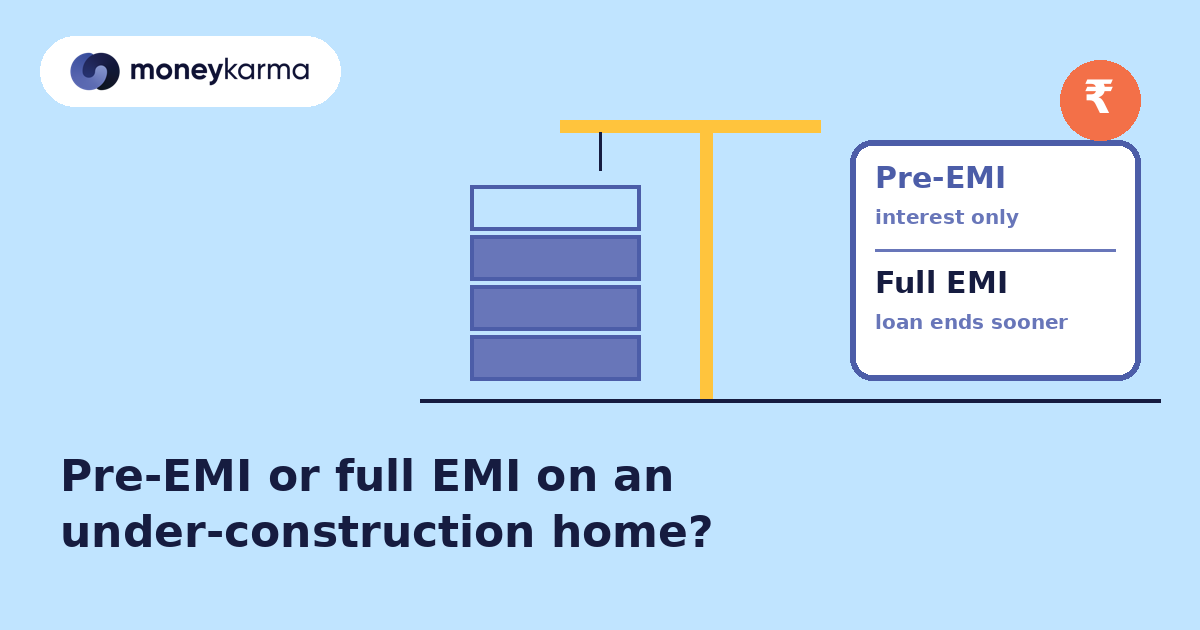
In a subvention scheme, the builder promises to pay your pre-EMI or EMI until possession, usually under a three-way agreement between you, the builder and the lender. The loan is still in your name.
RBI's housing finance rules warn that these products, sold as 80:20 or 75:25 schemes, expose borrowers to the risk that the builder stops paying, and that missed payments can hurt the borrower's credit score. They say disbursal must be closely linked to the stages of construction, with no upfront disbursal in incomplete or under-construction projects, except for projects run by government or statutory bodies.
The risk was real. In April 2025 the Supreme Court found a prima facie nexus between some builders and lenders in subvention schemes after over 1,200 homebuyers said builders stopped paying EMIs and banks then came after the buyers for flats that weren't finished. The CBI registered 22 cases in July 2025, and the Court allowed six more in September 2025.
If you're offered one, read who is liable for each EMI if the builder stops, get the lender's written disbursement schedule, and never agree to a large release before construction reaches that stage.
What does an 18-month delay cost?
Take Kavya, who books an ₹80 lakh flat in Hyderabad with possession promised for December 2027. Her loan is ₹64 lakh over 20 years, the most RBI's 80% cap allows for a loan between ₹30 lakh and ₹75 lakh. Assume 7.50%; that's an illustrative rate, and these are MoneyKarma calculations using the standard reducing-balance formula.
| Item | Amount |
|---|---|
| Booking amount before a registered agreement, at most | ₹8 lakh (10% under RERA section 13) |
| Full EMI on ₹64 lakh, 20 years, 7.50% | About ₹51,560 a month |
| Loan released by the promised date | ₹40 lakh (assumed) |
| Pre-EMI on ₹40 lakh | ₹25,000 a month |
| Extra interest if possession slips 18 months | About ₹4.5 lakh |
| Rent for 18 months at ₹25,000 | ₹4.5 lakh |
So a delay of a year and a half could cost Kavya about ₹9 lakh before her full EMI even starts. Under RERA section 18, she can claim interest from the builder for those months, at the rate her state's rules set. That claim is easier to make when her agreement, RERA dates and payment receipts all match.