What You'll Learn
- How much a home loan balance transfer saves when you move from an older 8.90% loan to today's lowest rates, using lender rates checked on 29 October 2026
- What switching banks costs and how many months it takes to earn the fee back
- When a balance transfer is not worth it
- The step-by-step process, from NOC to the first EMI with the new lender
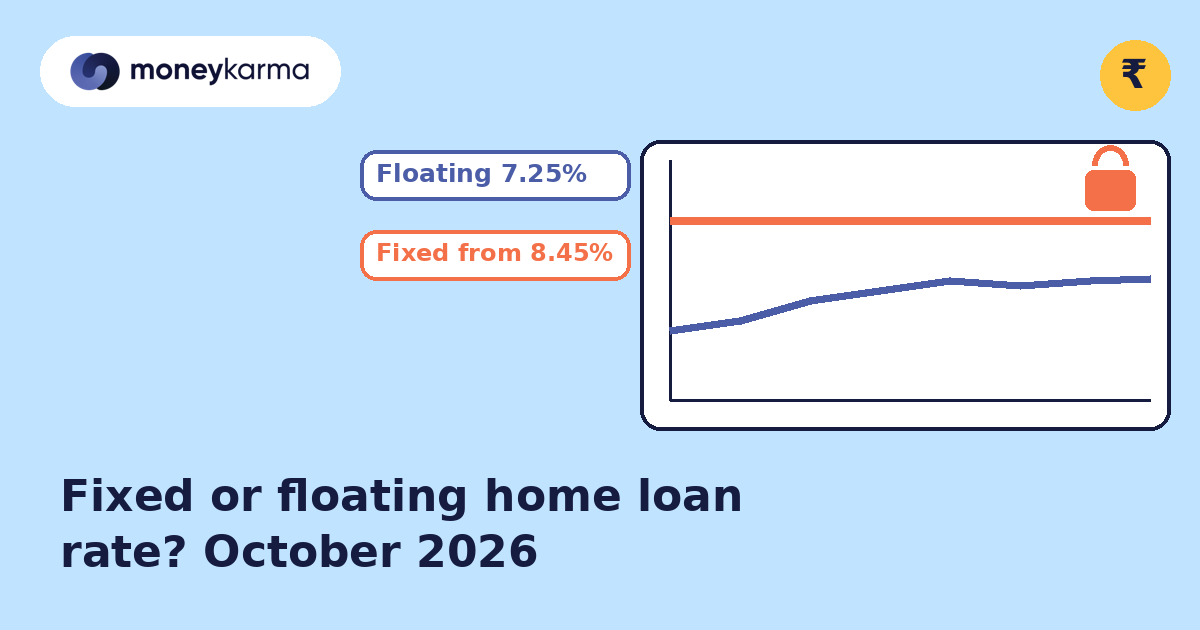
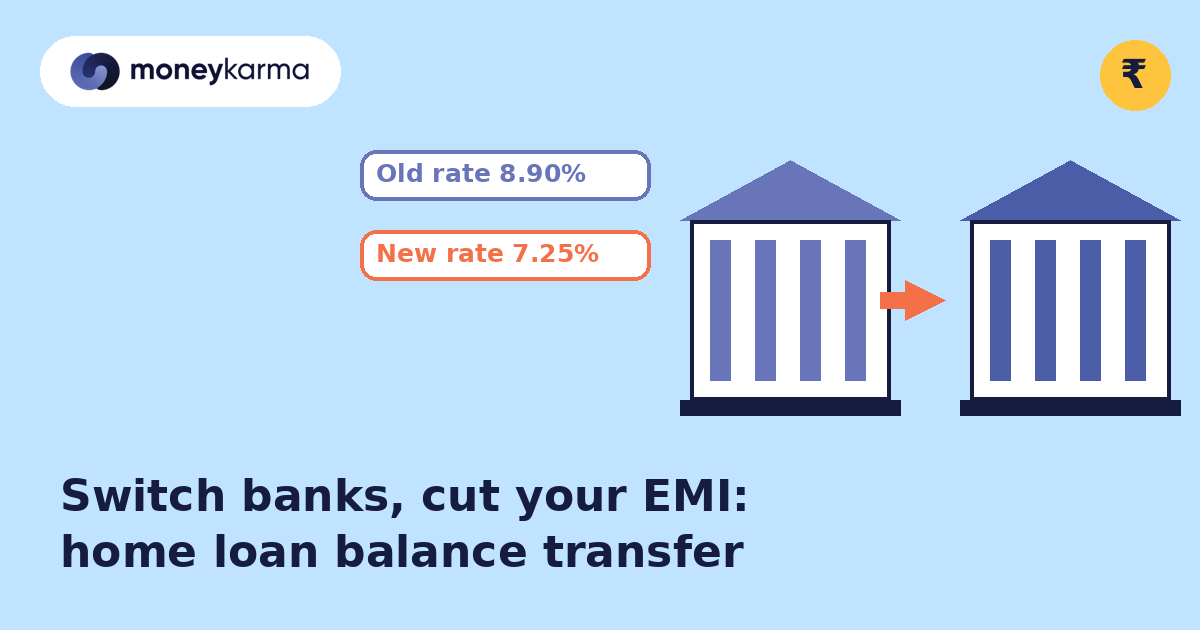
You can cut your home loan EMI by switching banks if the gap between your rate and the new lender's rate is wide enough and enough of the loan is left to pay. On lenders' own pages checked on 29 October 2026, the lowest home loan rate we found was 7.25% at a public-sector bank for salaried borrowers with a credit score of 800 or more. Moving ₹42 lakh with 16 years left from 8.90% to 7.25% lowers the EMI by ₹4,075 a month and saves ₹7.82 lakh of interest. A flat ₹8,500 takeover fee is recovered in about two months. This guide comes from MoneyKarma, India's home loan platform with 90+ lenders. Not a lender.
Key takeaway: A balance transfer pays off when the rate gap is about 1% or more and you have 10 years or more left. Below a 0.5% gap with only a few years to go, the fees usually eat the saving.
What is a home loan balance transfer?
It is moving your outstanding home loan from your current lender to a new one at a lower rate. A private bank describes the steps simply: the new lender settles your existing loan, the old loan is closed, and you start paying EMIs to the new lender. Your property is mortgaged to the new bank instead.
If your loan was sanctioned when your credit score was lower, or it sits on an older benchmark, your rate may be well above what a new borrower with a good score gets today.
How much can you save by switching from 8.90% to 7.25%?
Take Rahul, 38, a salaried manager in Bengaluru. He has ₹42 lakh outstanding, 16 years (192 EMIs) left and pays 8.90%. His EMI today is ₹41,096 and he still owes ₹36.90 lakh of interest. These are MoneyKarma calculations using the standard reducing-balance EMI formula; Rahul's loan and his 8.90% rate are an illustration.
| New rate | New EMI | Saving a month | Interest saved over 16 years |
|---|---|---|---|
| 7.25% | ₹37,021 | ₹4,075 | ₹7,82,346 |
| 7.50% | ₹37,625 | ₹3,471 | ₹6,66,466 |
| 7.75% | ₹38,233 | ₹2,863 | ₹5,49,622 |
7.25% is the rate the public-sector bank with the lowest rate charges salaried borrowers with a score of 800 or more. At a score of 750 to 799 the same bank charges 7.50%, so check your score before you apply. You can compare rates by lender on MoneyKarma's home loan interest rates page.
Should you lower the EMI or the tenure?
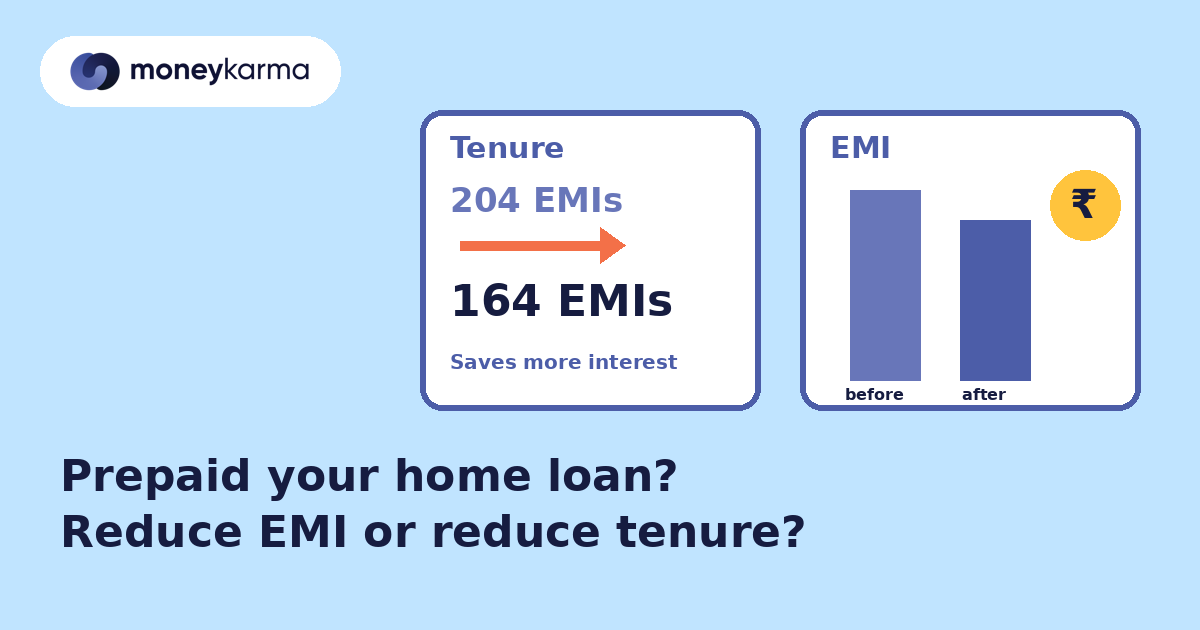
If you can keep paying ₹41,096, keep the old EMI and let the loan close early. At 7.25%, Rahul would finish in about 160 months instead of 192, roughly two and a half years sooner, and save ₹13.34 lakh of interest instead of ₹7.82 lakh. At 7.50% he would finish in about 163 months and save ₹11.75 lakh.
What does a balance transfer cost?
You pay the new lender's charges on a fresh loan. Here is what lenders' pages showed on 29 October 2026:
| Lender | Takeover or processing fee |
|---|---|
| Public-sector bank C | Takeover: flat ₹8,500, excluding GST |
| Private bank Y | Up to 1% of the loan amount or ₹10,000, whichever is higher, plus GST; its balance transfer FAQ calls this the primary transfer charge |
| Private bank X | 0.5% of the loan amount plus applicable taxes |
On top of the fee, budget for the new lender's legal and valuation checks and any stamp duty your state levies on the new mortgage. These vary, so ask for them in writing before you sign.
What you won't pay is a foreclosure charge to the old bank on a floating-rate loan. RBI does not allow prepayment charges on floating-rate loans to individuals for non-business purposes, and a private bank's balance transfer page says the same. A fixed-rate loan can carry one, so read your sanction letter.
How quickly do you earn the fee back?
Divide the fee by the monthly saving.
| Fee | At 7.25% | At 7.50% |
|---|---|---|
| ₹8,500 flat | About 2 months | About 2.4 months |
| 1% of ₹42 lakh (₹42,000) | About 10 months | About 12 months |
Either way, Rahul is ahead within a year. GST comes on top of the fee and pushes these slightly later.
When is a balance transfer not worth it?
When the gap is small and little of the loan is left. Say you owe ₹15 lakh with 5 years to go and a new lender offers 8.65% against your 8.90%. Your EMI falls from ₹31,065 to ₹30,883, a saving of ₹181 a month, or ₹10,886 over 5 years. A 1% fee of ₹15,000 would take about 83 months to recover, longer than the loan itself.
Watch these too:
- Late in a loan, most of your EMI is principal, so a rate cut saves less.
- A top-up taken with the transfer raises your loan, and with it your interest bill.
- Extending the tenure to cut the EMI can wipe out the interest saving.
- If your income or credit score has dropped since your first loan, the new lender may not match the advertised rate.
Should you ask your current bank first?
Yes. Ask your current lender in writing whether it will move your loan to its current rate and what it charges to do so. If the offer is close to the new lender's rate after fees, staying saves you the paperwork.
How does refinancing from 11% to 9% with a shorter tenure work?
The same maths applies. On ₹30 lakh with 15 years left, the EMI is ₹34,098 at 11%. At 9% over the same 15 years it drops to ₹30,428, saving ₹3,670 a month. If you keep paying about the old EMI, ₹34,141 at 9% clears the loan in 12 years, and total interest falls from ₹31.38 lakh to ₹19.16 lakh, a saving of ₹12.21 lakh.
How do you transfer a home loan to another bank, step by step?
- Get your loan statement, current rate and the outstanding principal from your lender.
- Compare offers from two or three lenders, including fees. MoneyKarma's home loan balance transfer page walks through the costs and the break-even point.
- Apply to the new lender with KYC, income documents, property papers and your repayment record. A private bank's page lists exactly these.
- Once the new lender sanctions the loan, write to your current lender asking for a No Objection Certificate and a foreclosure letter.
- The new lender pays off the old loan directly. Collect your original property documents and a closure certificate from the old bank.
- Start paying EMIs to the new lender.
Lenders treat a balance transfer much like a new application. One private bank asks for a credit score of 700 or more on transfers, and a public-sector bank adds a 0.05% rate concession on takeover loans in its top credit grades. A jointly taken loan can be moved too, but all co-borrowers have to sign.