What You'll Learn
- Whether freelancers and gig workers can get a home loan, and the rates lenders showed on 30 October 2026
- How lenders turn uneven freelance income into a loan amount
- The documents a freelancer needs, from lenders' own lists
- A worked example for a Delhi freelancer whose income jumped last year
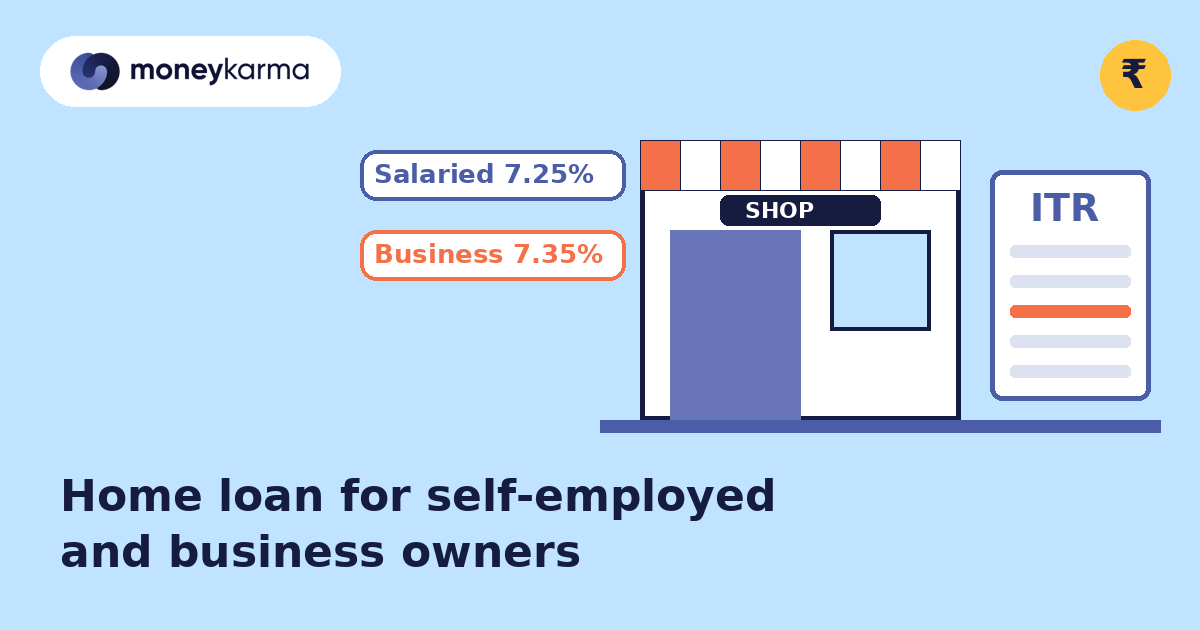
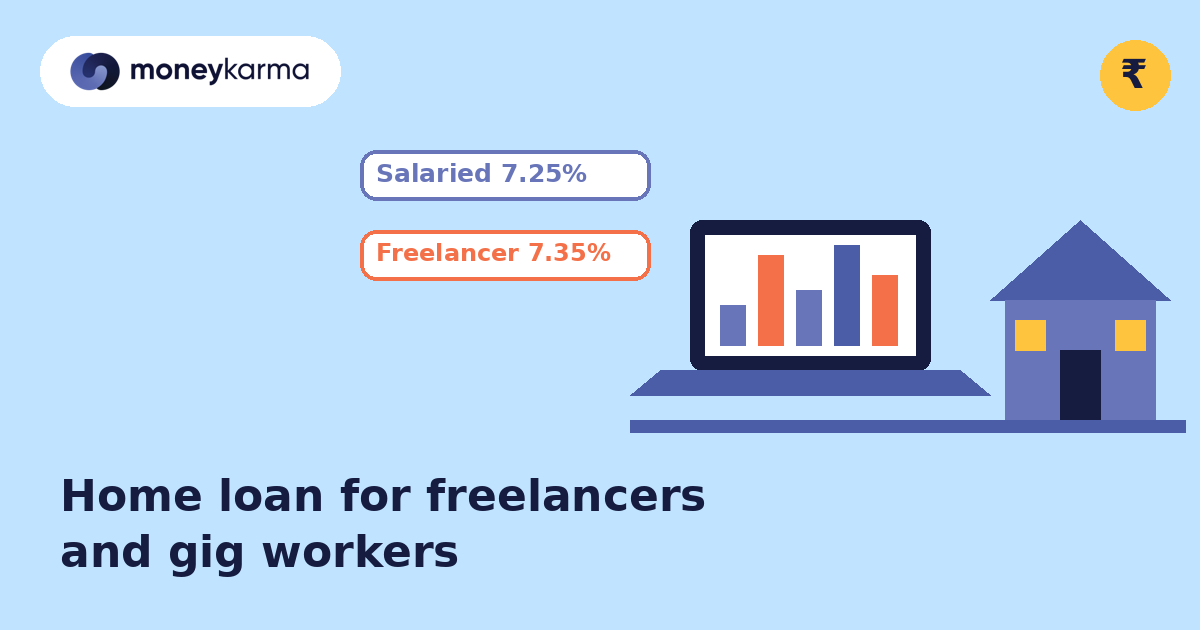
Yes, freelancers and gig workers can get a home loan in India, and at almost the same rate as salaried borrowers. On lenders' pages checked on 30 October 2026, the public-sector bank with the lowest rate we found charged a non-salaried borrower 7.35% at a credit score of 800 or more, against 7.25% for a salaried one. What decides your loan is the income your income tax returns show, usually averaged over two or three years, not what you earned last month. This guide comes from MoneyKarma, India's home loan platform with 90+ lenders. Not a lender.
Key takeaway: Lenders size a freelancer's loan on declared income. In our example, an average of ₹1.05 lakh a month in ITR income supports about ₹65.9 lakh over 20 years; declaring only ₹6 lakh a year would cut that to ₹31.4 lakh.
Can a freelancer or gig worker get a home loan?
Yes. Banks and housing finance companies treat freelancers as self-employed. A designer, developer, writer, consultant or video editor usually counts as a self-employed professional. Lenders' rules for this group are published alongside their salaried rules:
- A public-sector bank lists salaried borrowers, self-employed professionals, businessmen and eligible NRIs as eligible for its home loan.
- A housing finance company asks self-employed applicants for at least three years of business continuity, a filed income tax return and a credit score of at least 611, and lends up to 90% of the property value.
Gig workers paid by apps, such as delivery or ride partners, face the same test. If your income reaches your bank account and you file returns, you can apply. If you have never filed an ITR, start now, because most lenders we checked ask for one. We found no lender page publishing a policy that uses alternative credit data, such as app payout history, in place of returns.
What home loan rate does a freelancer pay?
Close to a salaried borrower's. Here is what lenders' own pages showed on 30 October 2026. Lenders aren't named. Rates are floating and linked to the RBI repo rate, which is 5.50% after the 7 October 2026 increase.
| Lender type | Salaried | Self-employed or non-salaried | Credit score |
|---|---|---|---|
| Public-sector bank A | 7.25% | 7.35% | 800 and above |
| Public-sector bank A | 7.50% | 7.60% | 750 to 799 |
| Public-sector bank A | 8.00% | 8.20% | 700 to 724 |
| Public-sector bank A | 8.60% | 8.80% | 650 to 699 |
| Private bank A | 8.75% to 9.65% | 8.75% to 9.80% | Loans up to ₹35 lakh |
| Private bank B | 8.00% to 13.45% | 8.00% to 13.45% | By profile |
| Housing finance company | Not compared | From 8.80% | By profile |
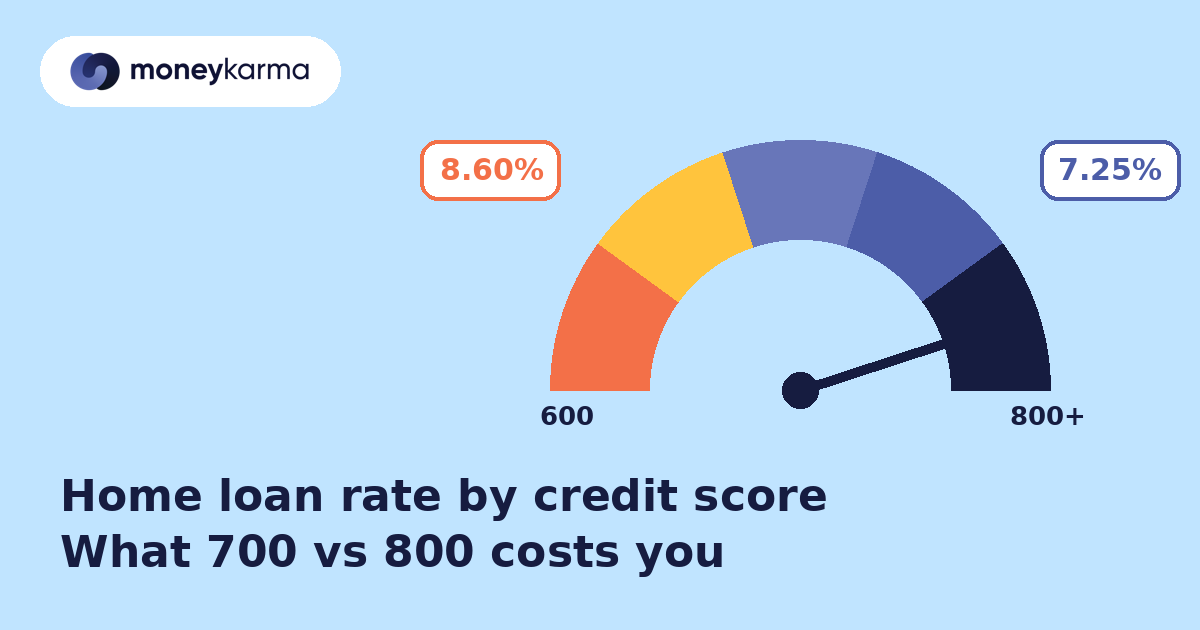
Your credit score moves the rate far more than your job type. On a ₹50 lakh loan over 20 years, 7.35% means an EMI of ₹39,822; 8.80% means ₹44,345. That gap of ₹4,523 a month adds up to ₹10.85 lakh over the loan. Compare offers on MoneyKarma's home loan interest rates page.
How do lenders work out a freelancer's eligibility?
They start from the net income in your ITRs, not your invoices or gross receipts. Most average the last two or three returns, then check how much of that monthly figure is already going to EMIs. The share they allow for all EMIs together is called FOIR, and each lender sets its own. What's left decides your EMI, and the EMI decides your loan.
The loan is then capped by the property's value. RBI's limits are 90% of value for loans up to ₹30 lakh, 80% above ₹30 lakh to ₹75 lakh and 75% above ₹75 lakh. Stamp duty and registration are yours to pay. MoneyKarma's home loan eligibility page shows the income side in more detail.
Why does uneven income hurt?
Averaging works against you after a good year. If your income rose sharply last year, the average pulls it down. If it fell, the lender may ask why. A long gap between projects can also show up in your bank statements, which some lenders read for a full year.
Which documents does a freelancer need for a home loan?
From the lists we checked on 30 October 2026:
- KYC: PAN, Aadhaar or another photo ID, and address proof
- ITRs with computation of income: the latest two years for professionals and three years for businessmen at a public-sector bank, with profit and loss account, balance sheet and audit report where applicable
- Bank statements: for the past one year at the same bank; the housing finance company asks for statements to show cash flow and income stability
- Proof of business or practice: a registration, licence or similar where you have one
- Property papers for the home you are buying
Practical extras help. Keep client payments flowing into one account. Keep contracts or retainer letters from regular clients. Make sure the income you report matches what your tax statement shows, since a mismatch slows the file.
A worked example: a Delhi freelancer whose income jumped
Kabir, 29, is a freelance video editor in Delhi with a credit score above 800 and no other loans. His ITRs show net income of ₹10.8 lakh for one year and ₹14.4 lakh for the next. These are MoneyKarma calculations using the standard reducing-balance EMI formula and an illustrative 50% FOIR.
| How the lender reads his income | Monthly income | EMI at 50% | Loan at 7.35%, 20 years | Loan at 8.80%, 20 years |
|---|---|---|---|---|
| Two-year average | ₹1,05,000 | ₹52,500 | ₹65.9 lakh | ₹59.2 lakh |
| Latest year only | ₹1,20,000 | ₹60,000 | ₹75.3 lakh | ₹67.7 lakh |
| If he had declared ₹6 lakh a year | ₹50,000 | ₹25,000 | ₹31.4 lakh | Not worked out |
Three things stand out. A lender that reads only the latest year would lend him about ₹9.4 lakh more. Underdeclaring income to save tax costs far more in borrowing power than it saves. And a lower score at an 8.80% lender costs him ₹6.7 lakh of eligibility on the average.
What if his salaried wife joins as co-applicant?
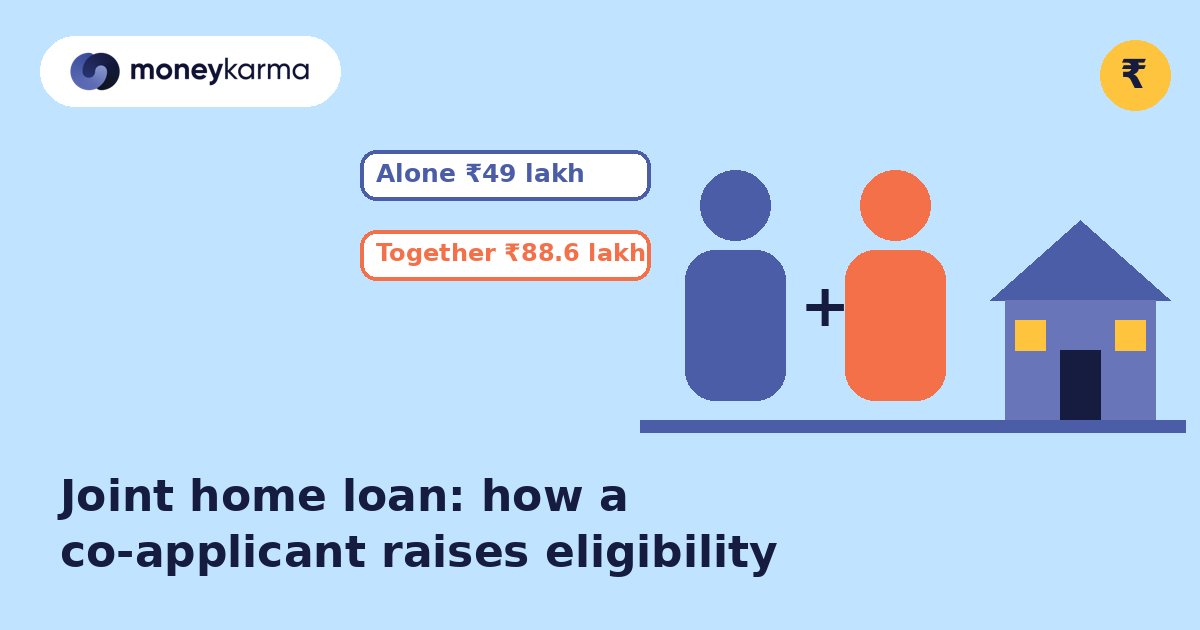
If his wife earns ₹50,000 a month in salary and has no EMIs, the combined ₹1.55 lakh supports about ₹97.3 lakh at 7.35% over 20 years. A ₹60 lakh loan, 80% of a ₹75 lakh flat, would then cost ₹47,787 a month, 30.8% of their joint income, against 45.5% of his average alone. A salaried co-applicant also steadies the file, because one income in it doesn't move.
How can a freelancer improve the odds of approval?
- File returns on time every year, and declare your real income.
- Keep your credit score above 750; the rate steps in the table above start there.
- Save a bigger down payment, which lowers the loan and the EMI test.
- Clear small loans and card dues before you apply.
- Apply after two steady years if your income only recently rose.