What You'll Learn
- When prepaying your home loan beats investing the same money, using rates checked on 26 October 2026
- Why the tax deduction on interest matters less than most borrowers think on a large loan
- What ₹5 lakh of prepayment does to a ₹40 lakh loan, in rupees and months
- A simple order of priority for a bonus or windfall
Prepay your home loan if the money would otherwise sit in a fixed deposit, and invest it only if you expect a long-term, after-tax return clearly above your loan rate and can live with the risk. On 26 October 2026 the lowest home loan rate we found on lenders' own pages was 7.25%, while a public-sector bank's fixed deposit paid 6.25% to 6.40% before tax. Every rupee you prepay earns your loan rate with no risk. This guide comes from MoneyKarma, India's home loan platform with 90+ lenders. Not a lender.
Key takeaway: Prepaying ₹5 lakh on a ₹40 lakh loan at 7.50%, with the EMI unchanged, saves about ₹11.5 lakh of interest and ends the loan four years early. A fixed deposit taxed at 30% would need to pay more than 10.7% before tax just to match the loan rate.
Should I prepay my home loan or invest?
Think of prepayment as an investment that pays exactly your home loan rate, after tax, every year, with no market risk. So the real question is whether you can beat that rate somewhere else after tax and with the same safety.
Here is how the main options compared on 26 October 2026.
| Option | Return | After tax at the 30% slab | Risk and access |
|---|---|---|---|
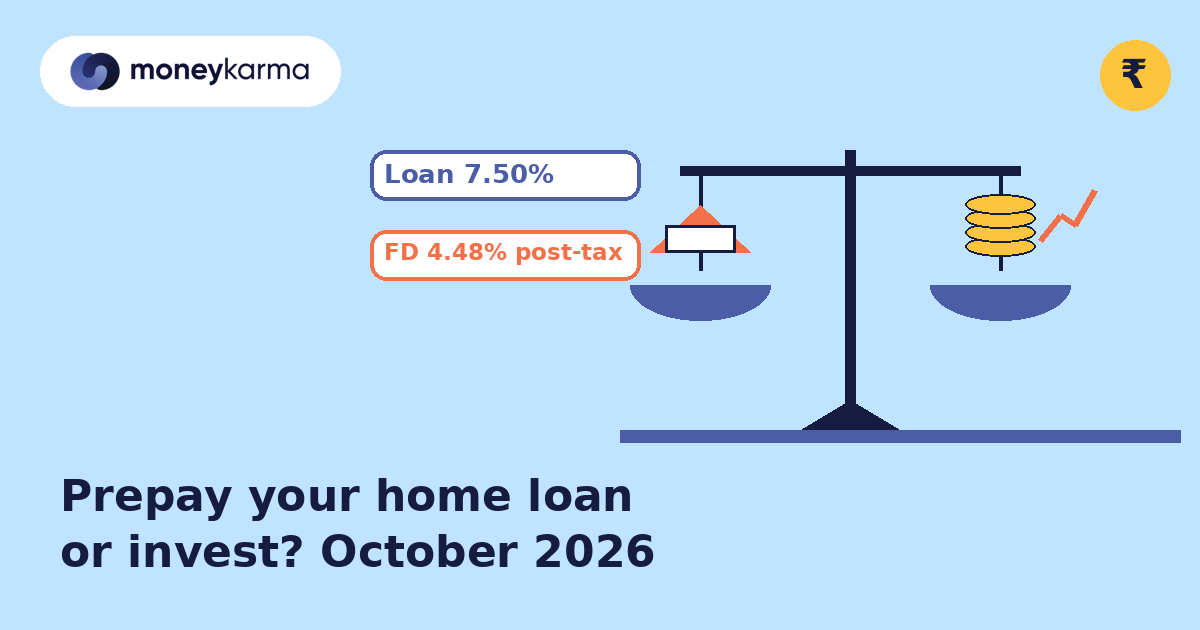
| Prepay a 7.50% home loan | 7.50% interest saved | 7.50% (if your interest is above the ₹2 lakh cap or you are in the new regime) | No risk; money is locked into the house |
| Public-sector bank FD, 1 to 2 years | 6.25% | 4.38% | Low risk; can break early |
| Public-sector bank FD, 2 to 3 years | 6.40% | 4.48% | Low risk; can break early |
| Public Provident Fund | 7.10% | 7.10% (tax-exempt) | Government-backed; ₹1.5 lakh a year cap, 15-year account |
| Equity mutual funds | Not fixed | Depends on returns and tax | Can fall sharply in any year |
A fixed deposit loses to prepayment for almost every borrower once tax is counted. PPF comes close, at 7.10% tax-exempt against a 7.25% to 7.50% loan, but you can only put ₹1.5 lakh a year into it. Equity is the only option that may beat your loan over 10 years or more, and it carries real risk. You can compare current home loan interest rates across lenders on MoneyKarma.
Does the tax deduction on interest change the answer?
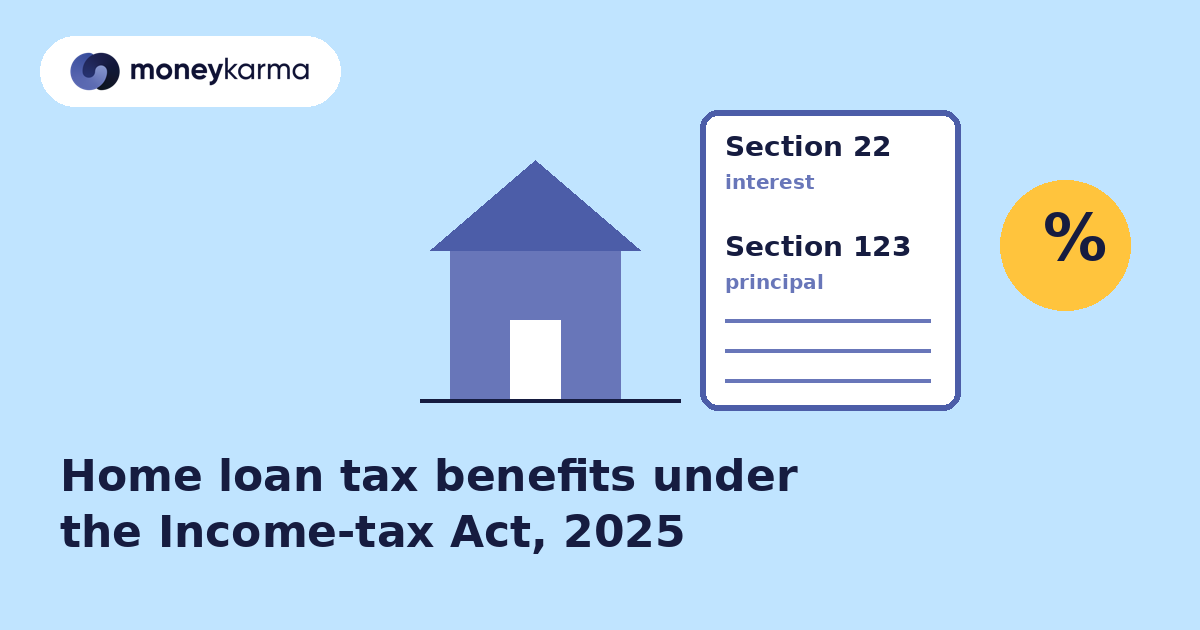
Less than you would expect. Under section 22 of the Income-tax Act, 2025, which applies from 1 April 2026, you can deduct up to ₹2 lakh a year of interest on a self-occupied home, and only under the old tax regime. The new regime gives no deduction for a self-occupied home.
On a ₹40 lakh loan at 7.50% with 18 years left, first-year interest is about ₹2.96 lakh. You already pass the ₹2 lakh cap, so the extra interest you save by prepaying was never deductible. Your true cost on that money is the full 7.50%.
The deduction only matters on a smaller loan. On ₹20 lakh at the same rate, first-year interest is about ₹1.48 lakh, all within the cap. For someone in the 30% slab under the old regime, the effective cost is about 5.25% before cess. Then a long-term investment has a lower bar to clear.
What does prepaying ₹5 lakh actually save?
Meet Rohan, 38, a salaried manager in Pune. He has ₹40 lakh left on his home loan at 7.50%, with 18 years (216 EMIs) to go. His EMI is ₹33,799. He has a ₹5 lakh bonus. These are MoneyKarma calculations using the standard reducing-balance EMI formula.
| Choice | Effect |
|---|---|
| Do nothing | Interest still to pay: ₹33.0 lakh |
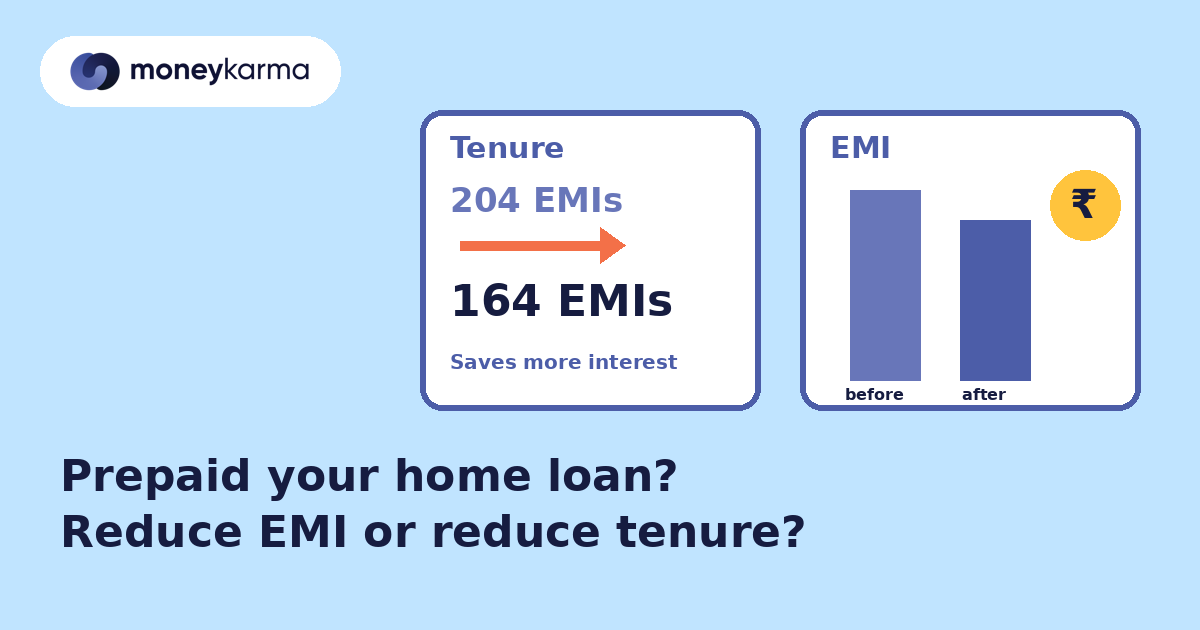
| Prepay ₹5 lakh, keep the EMI | Loan ends 48 months early; interest falls to ₹21.5 lakh, saving ₹11.5 lakh |
| Prepay ₹5 lakh, keep the tenure | EMI drops to ₹29,574, ₹4,225 a month less; interest saving ₹4.1 lakh |
| Put ₹5 lakh in a 6.40% FD instead, 30% slab | Earns 4.48% after tax |
Keeping the EMI and cutting the tenure saves almost three times as much interest. It is the better choice if your EMI is comfortable today. Cutting the EMI suits you if your budget is tight or you expect a big expense soon.
How long would an investment take to beat that?
Look at the money left alone for 10 years. ₹5 lakh growing at 7.50% a year becomes about ₹10.3 lakh. At the FD's 4.48% after tax it becomes about ₹7.8 lakh. At PPF's 7.10% it becomes about ₹9.9 lakh, though only ₹1.5 lakh a year can go in. To beat the prepayment, an investment has to earn more than 7.50% a year after tax, every year, on average.
Are there charges for prepaying a home loan?
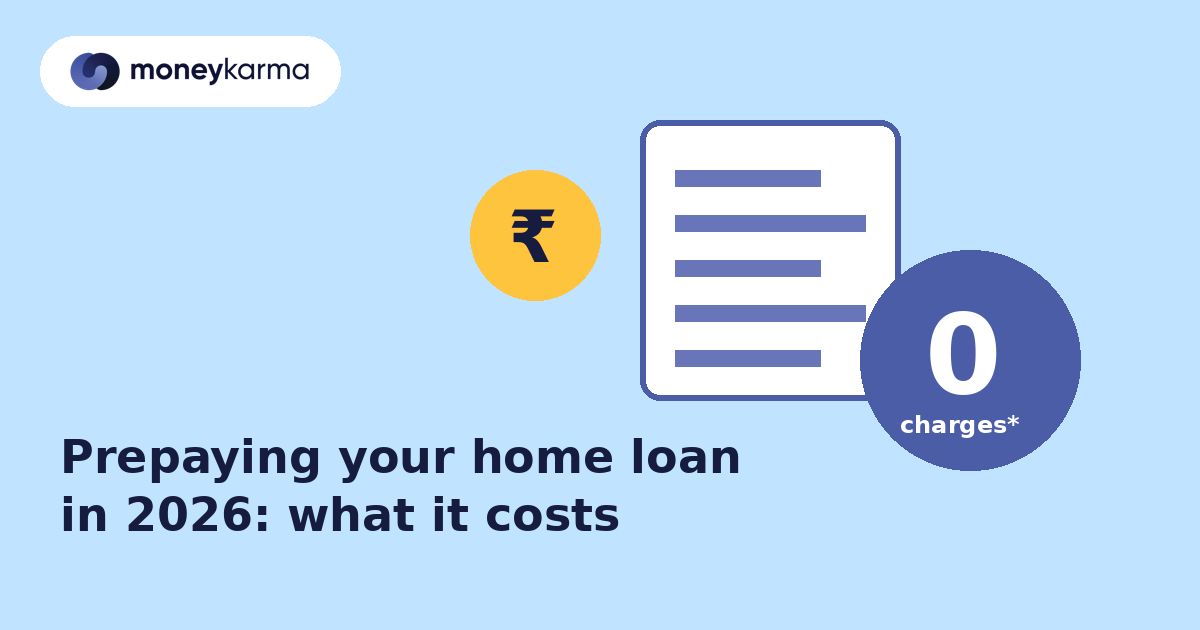
Not on a floating-rate loan taken by an individual for a non-business purpose. RBI rules bar banks from charging foreclosure or part-prepayment fees on floating-rate loans to individuals, and RBI's Pre-payment Charges Directions of 2 July 2025 extend this to all regulated lenders for loans sanctioned or renewed from 1 January 2026. Fixed-rate loans can still carry a charge, so check your sanction letter.
Ask your lender for a fresh repayment schedule after each prepayment, and confirm in writing whether it reduced the tenure or the EMI. Some lenders default to one or the other.
When should you invest instead of prepaying?
Investing makes sense in a few situations:
- Your loan is small enough that interest stays within the ₹2 lakh cap and you use the old regime, which lowers your true cost.
- You have 10 years or more and can stay invested through a market fall without selling.
- You have not yet built an emergency fund. Money paid into the loan is hard to get back quickly.
- Your loan rate is at the low end, close to 7.25%, and you can use your full ₹1.5 lakh PPF limit first.
Many borrowers split the money. Keep six months of expenses in the bank, fill your PPF, then put the rest into the loan.
What order works for a bonus or windfall?
- First, an emergency fund of about six months of expenses.
- Second, clear any loan costing more than your home loan, such as a personal loan or credit card dues.
- Third, decide between prepaying and long-term investing using the table above.
Should you check your loan rate before deciding?
Yes. If your current rate is well above 7.25%, a home loan balance transfer may cut your interest more than a one-time prepayment does. On ₹40 lakh, every 0.25% matters over 18 years. After the 7 October 2026 repo rate increase to 5.50%, many floating rates have reset, so look at your latest statement.