What You'll Learn
- Whether you can move an old MCLR-linked home loan to a repo-linked rate, and what RBI's rules say about fees
- How MCLR and repo-linked loans reset after the October 2026 rate change
- What lenders charge to switch, from their own pages checked on 1 November 2026
- How to ask your bank for the switch, with a worked example on a ₹40 lakh loan
Yes, you can switch an MCLR-linked home loan to a repo-linked rate, and RBI's rules say the new rate should match what the bank charges a new borrower like you. Under RBI's Interest Rates on Advances Directions, 2025, a floating-rate borrower who can prepay without charges can move to an external benchmark with no fee except reasonable administrative or legal costs. On lenders' pages checked on 1 November 2026, the lowest repo-linked home loan rate we found was 7.25% at a public-sector bank, while another public-sector bank's one-year MCLR is 8.85%. This guide comes from MoneyKarma, India's home loan platform with 90+ lenders. Not a lender.
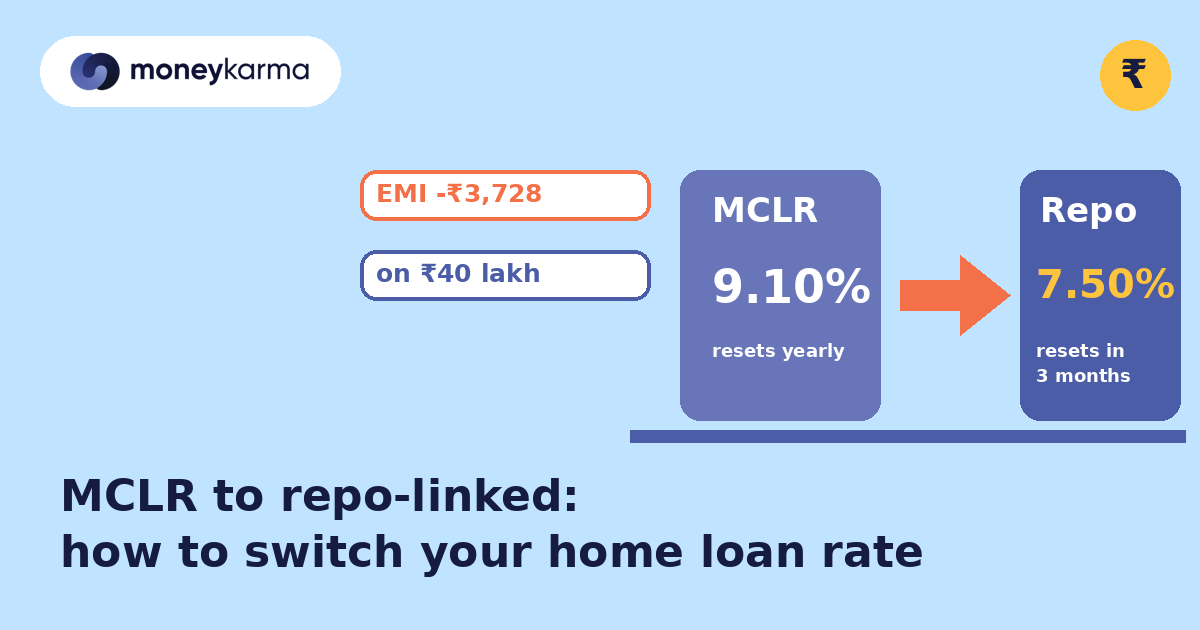
Key takeaway: On ₹40 lakh with 15 years left, moving from 9.10% on MCLR to 7.50% repo-linked cuts the EMI by ₹3,728 a month and total interest by about ₹6.71 lakh. A ₹10,000 switch fee is recovered in under three EMIs.
What is the difference between an MCLR and a repo-linked home loan?
The benchmark, and how often your rate moves with it.
- MCLR is the bank's own marginal cost of funds based lending rate. Your loan rate is the MCLR plus a spread, and RBI's rules say the reset period under MCLR corresponds to the MCLR tenor the loan is linked to. For a one-year MCLR loan, that usually means one reset a year.
- A repo-linked loan (called RLLR or EBLR by different banks) is tied to an external benchmark, usually the RBI repo rate. RBI requires the rate under an external benchmark to reset at least once in three months.
- RBI requires floating-rate retail loans, including home loans, to be benchmarked to an external benchmark. Existing MCLR loans continue until repayment or renewal unless you switch.
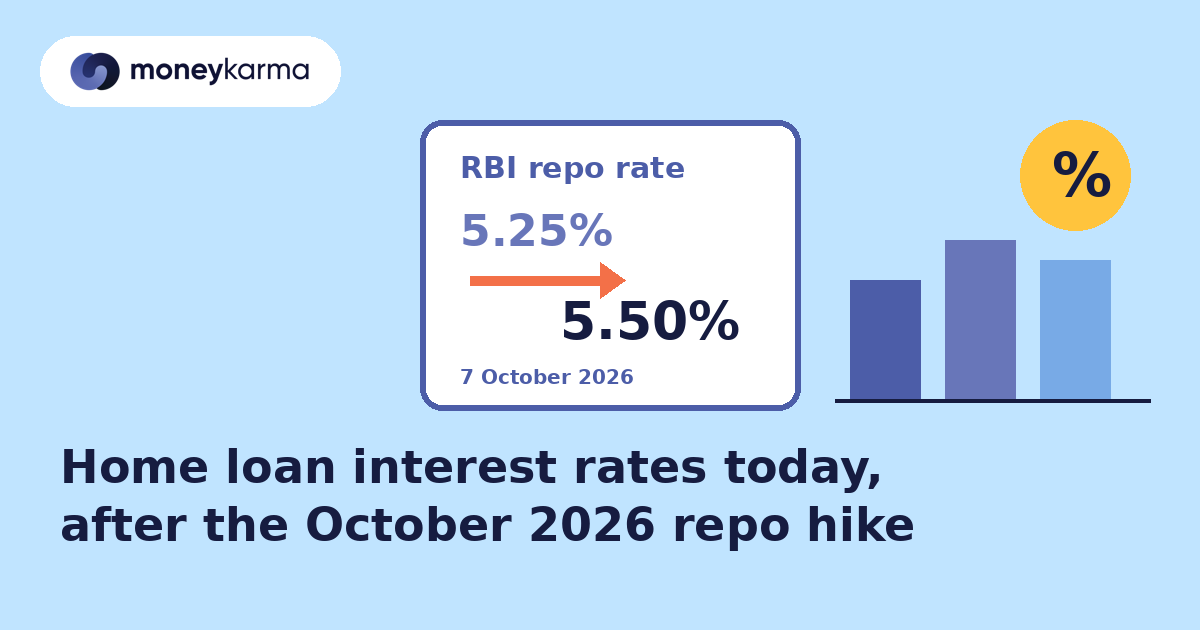
You can see the gap on today's rate sheets. One public-sector bank's repo-linked lending rate is 8.25%, made up of the repo rate of 5.50% plus a 2.75% spread, and its best home loan rate is 7.40%. Another public-sector bank's one-year MCLR is 8.85%, and a third prints 9.05% as of 29 September 2026.
Will an MCLR home loan rate go up after the RBI hike?
Yes, but later. One public-sector bank raised its one-year MCLR from 8.70% to 8.85% from 15 October 2026, a 0.15% increase. An MCLR borrower feels it at the next reset date, which may be months away. A repo-linked borrower sees the change within three months.
That lag tempts some MCLR borrowers to stay put. The catch is the spread: many older MCLR loans already cost well above what a similar new borrower pays today.
What does RBI say about switching from MCLR to repo-linked?
Three things, from paragraph 41 of RBI's Interest Rates on Advances Directions, 2025:
- Floating-rate borrowers who can prepay without charges "shall be eligible for switchover to External Benchmark without any charges / fees, except reasonable administrative / legal costs".
- "The final rate charged to this category of borrowers, post switchover to external benchmark, shall be same as the rate charged for a new loan of the same category, type, tenor and amount".
- The switch "shall not be treated as a foreclosure of existing facility". It changes your existing loan rather than creating a new one.
If your floating-rate loan carries no prepayment charge (check the sanction letter), you're in this group.
How much do banks charge to switch to a repo-linked rate?
Here's what lenders' own pages showed on 1 November 2026. Lenders aren't named.
| Lender type | Switch fee shown | Notes |
|---|---|---|
| Foreign bank in India | Up to ₹2,500 plus taxes | One-time fee, MCLR, base rate or retail lending rate to RLLR |
| Private bank A | 0.5% of principal outstanding and undisbursed amount, capped at ₹10,000, plus taxes | Housing, extension and improvement loans |
| Private bank B | 0.25% of principal outstanding or ₹5,000, whichever is lower, plus taxes | Fee to convert to its current adjustable rate on a fully disbursed loan |
| Private bank C | Fee applies, details at the branch | New rate is the one applicable to a new loan for the same category of customer |
RBI's wording allows only reasonable administrative or legal costs for eligible borrowers, so ask for the fee in writing before you sign the request. On a ₹40 lakh balance, private bank A's 0.5% works out to ₹20,000, so its ₹10,000 cap applies.
A worked example: Meera's ₹40 lakh MCLR loan
Meera took a home loan years ago, linked to the one-year MCLR. She owes ₹40 lakh with 15 years left. Her rate is 9.10%, which we've assumed is today's one-year MCLR of 8.85% plus a 0.25% spread. Her bank's card rate for new borrowers starts at 7.50%. These are MoneyKarma calculations using the standard reducing-balance EMI formula. Meera, her spread and her balance are illustrative.
| Option | Rate | EMI | Interest over the rest of the loan |
|---|---|---|---|
| Stay on MCLR | 9.10% | ₹40,809 | ₹33.46 lakh |
| Switch, same tenure | 7.50% | ₹37,080 | ₹26.74 lakh |
| Switch, keep old EMI | 7.50% | ₹40,809 | ₹22.11 lakh |
Switching with the same tenure saves ₹3,728 a month and about ₹6.71 lakh of interest. If Meera keeps paying her old EMI, the loan closes in about 12 years and 8 months, and her interest falls by about ₹11.34 lakh. A ₹10,000 fee is covered in under three months.
The trade-off: her new rate will move with the repo rate. If the repo-linked rate rises by 0.25%, her EMI at 7.75% goes up by ₹571 a month.
How do you ask your bank to switch to a repo-linked rate?
Do it in writing, with numbers.
- Find your benchmark, spread and reset date in the sanction letter or the latest loan statement.
- Check the bank's current home loan rate for your credit score, loan amount and income type. That's the rate RBI's rule points to.
- Send a conversion request to your home branch or loan servicing branch, and ask for the new rate, the new spread, the fee and the effective date in writing.
- Ask whether the saving goes to a lower EMI or a shorter tenure. RBI's FAQ on rate resets says its reset rules cover MCLR-linked loans too.
- If the bank's offer is still well above other lenders, compare it with a balance transfer. MoneyKarma's home loan balance transfer page shows how to work out the break-even.
Should you switch to a fixed rate instead?
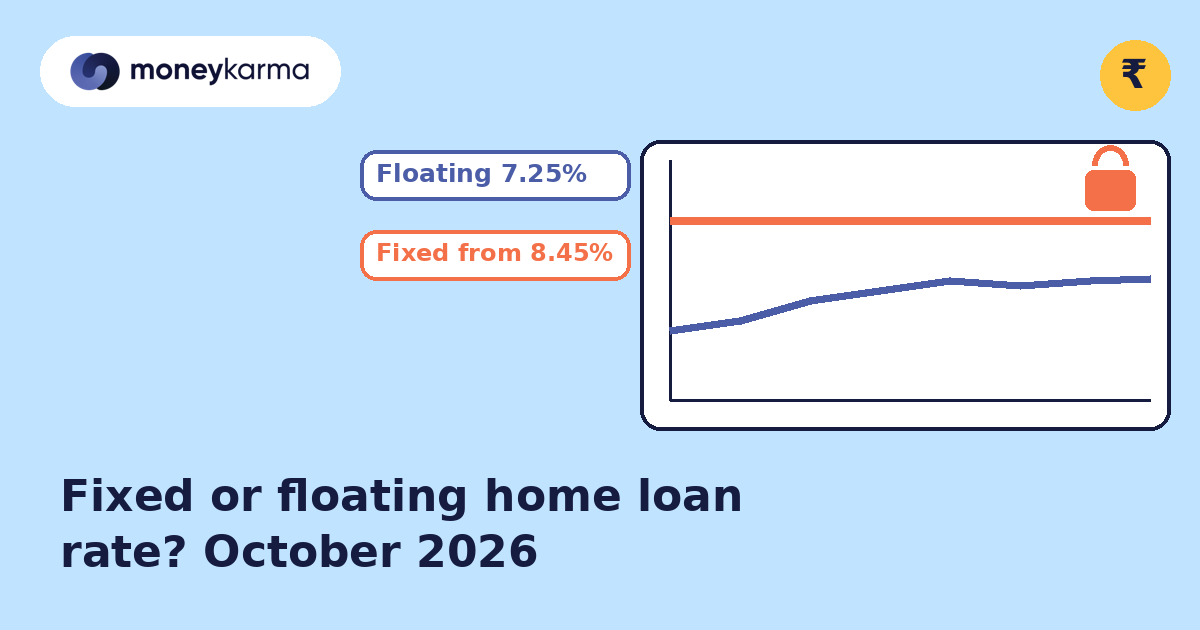
Only if the numbers work. One public-sector bank's fixed rate for loans above ₹30 lakh to ₹75 lakh is 12.70%, reset after three years, against 7.25% repo-linked for its best borrowers. Read MoneyKarma's guide to fixed vs floating home loan rates before you choose.